Can Melanin Be Reduced Permanently? How to Reduce Excess Melanin Safely
Can melanin be reduced permanently? Learn why excess melanin develops, whether it can be reduced safely, which treatments may help pigmentation, and what a dermatologist considers before recommending treatment.
Melanin is the natural pigment responsible for the colour of your skin, hair and eyes. It is produced by specialised cells called melanocytes and plays an important role in protecting the skin from ultraviolet radiation.
Sometimes, the skin produces more pigment in particular areas or pigment becomes unevenly distributed. This can appear as dark spots, patches, tanning or an uneven skin tone. People often describe this as “excess melanin” and search for ways to reduce melanin in the skin permanently.
But can melanin actually be reduced permanently? Not in the sense of completely switching off melanin production. Melanin is a normal part of healthy skin. The more useful approach is to identify why excess pigmentation has developed and treat that underlying cause while preventing further darkening.
Depending on the cause, pigmentation may be related to sun exposure, melasma, acne or inflammation, skin irritation, hormonal changes, certain medicines or another skin condition. This is why the right treatment can be very different from one person to another.
In this guide, we explain what causes excess pigmentation, what can realistically help reduce it, which treatments may be considered, what you can safely do at home and when it is worth seeing a dermatologist.
What Causes Excess Melanin Production?
Increased pigmentation does not always have one cause. Melanocytes can become more active in response to different internal and external triggers. Identifying the trigger is important because treating pigmentation without addressing its cause may lead to incomplete improvement or recurrence.
- Sun and UV exposure: UV radiation can stimulate pigment production and darken existing pigmentation.
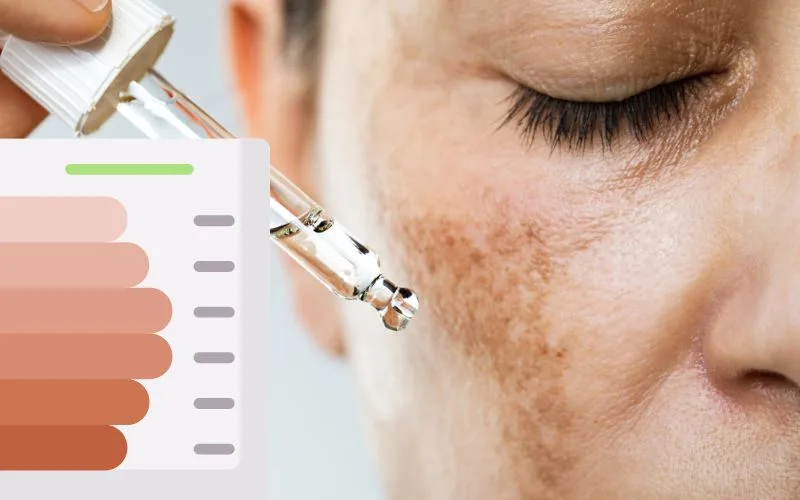
- Melasma: Hormonal influences and sun exposure can contribute to melasma, which commonly causes brown or grey-brown patches on the face.
- Acne and inflammation: Pigmentation can remain after acne, irritation or inflammation has healed.
- Skin injury or friction: Repeated rubbing, picking or irritation can contribute to darkening.
- Certain medicines or medical conditions: Some medications and skin conditions can cause changes in pigmentation.
- Hormonal changes: Pregnancy and other hormonal influences can contribute to some pigmentation conditions.
Can Melanin Be Reduced Permanently?
Melanin cannot usually be permanently switched off throughout the skin, and trying to remove the skin’s natural pigment is not the goal of dermatological treatment.
What can often be treated is unwanted or excessive pigmentation. When the underlying cause is identified, a dermatologist can recommend an appropriate combination of sun protection, topical treatment and, when suitable, in-clinic procedures.
The outcome depends on the cause of pigmentation, the depth of the pigment, your skin type, the treatment selected and whether the factors triggering pigmentation can be controlled. Some pigmentation problems improve significantly, while conditions such as melasma can be persistent or recur.
So, if your goal is to reduce excess melanin or dark pigmentation, the safer question is not “How do I remove melanin permanently?” but “What is causing my pigmentation, and what treatment is appropriate for it?”
Melanin vs Hyperpigmentation: What Is the Difference?
Melanin is a normal pigment; hyperpigmentation is a change in skin colour in which certain areas become darker than the surrounding skin.
Having more natural melanin does not automatically mean that the skin is unhealthy or needs lightening. Treatment is generally considered when there is unwanted, uneven or excessive pigmentation.
This distinction matters because the treatment for melasma, post-inflammatory hyperpigmentation, sun-related dark spots and other pigmentation concerns may be different.
Treatment Options for Excess Pigmentation
There is no single treatment that works for every pigmentation concern. A dermatologist may choose one treatment or combine different approaches depending on the diagnosis, depth of pigmentation, skin type and previous treatment history.
1. Topical Treatments
Dermatologist-prescribed topical treatments may help reduce excess pigmentation and regulate pigment production. Depending on the diagnosis, a dermatologist may consider ingredients such as hydroquinone, tretinoin, azelaic acid, kojic acid or vitamin C. The choice, strength and duration should be personalised rather than self-prescribed.
2. Chemical Peels
Chemical peels use a controlled chemical solution to exfoliate selected layers of the skin. They may help improve some superficial pigmentation and uneven skin tone. The type and strength of peel should be selected according to the pigmentation concern and skin type.
3. Laser and Light-Based Treatments
Certain laser or light-based treatments may be considered for selected pigmentation concerns. They are not suitable for every type of pigmentation, and the choice of device depends on the diagnosis, depth of pigment and skin characteristics.
A dermatologist should assess the skin before recommending a laser procedure because inappropriate treatment can sometimes cause irritation or further pigmentation.
4. Microneedling
Microneedling may be considered for selected pigmentation concerns and may form part of a combination treatment plan. Its suitability depends on the diagnosis and condition of the skin.
5. Combination Treatment
Pigmentation may require more than one approach. Depending on the condition, a dermatologist may combine sun protection, topical treatment and an in-clinic procedure to address both the pigmentation and the factors contributing to it.
Why Sun Protection Matters When Reducing Pigmentation
Sun exposure can stimulate pigment production and make existing pigmentation darker. This is why sun protection remains important even when you are using a pigmentation treatment.
Use a broad-spectrum sunscreen with SPF 30 or higher and follow the product directions for reapplication. For some pigmentation concerns, especially melasma, a tinted sunscreen containing iron oxide may provide additional protection from visible light.
Sun protection does not “remove melanin.” Its role is to reduce the triggers that can cause further pigmentation and help maintain treatment results.
Can Home Remedies Reduce Melanin?
There is no reliable home remedy that can permanently switch off melanin production or safely remove the skin’s natural pigment.
Some DIY ingredients can also irritate the skin. Irritation and inflammation may make pigmentation more noticeable rather than improving it.
If you want to manage pigmentation at home, focus on consistent sun protection, gentle skincare and treatment of any underlying acne or inflammation instead of aggressive DIY remedies.
What Can Make Pigmentation Worse?
Even when treatment is working, pigmentation may become darker again if the skin continues to experience triggering factors.
Common things to avoid include:
- Excessive sun exposure without adequate protection
- Aggressive scrubbing or over-exfoliation
- Picking acne or repeatedly irritating the skin
- Using harsh bleaching or unverified DIY products
- Starting strong pigmentation treatments without knowing the underlying cause
Gentle skincare and appropriate sun protection are important parts of managing pigmentation.
Do's and Don'ts for Managing Pigmentation
Do:
- Use broad-spectrum SPF 30+ sunscreen regularly.
- Keep skincare gentle and consistent.
- Treat acne or inflammation that may be contributing to pigmentation.
- Follow the treatment plan recommended for your skin.
Don't:
- Aggressively scrub pigmented areas.
- Use lemon juice or other irritating DIY remedies.
- Use prescription pigment-lightening medicines without professional guidance.
- Expect overnight or permanent results from a single treatment.
When Should You See a Dermatologist for Pigmentation?
Consider professional assessment if pigmentation is persistent, spreading, repeatedly returning, developing after acne or inflammation, or not improving with basic skincare.
A dermatologist can determine whether the pigmentation is more consistent with melasma, post-inflammatory hyperpigmentation, sun-related pigmentation or another condition and then recommend an appropriate treatment approach.
Not sure what is causing your pigmentation? Learn more about [Pigmentation Treatment in Dwarka].
Frequently Asked Questions
Can melanin be reduced permanently?
Melanin cannot usually be permanently switched off throughout the skin. However, unwanted pigmentation can often be improved by identifying and treating its underlying cause.
How can I reduce melanin in my skin?
The appropriate approach depends on why pigmentation has increased. Sun protection, dermatologist-recommended topical treatments and selected in-clinic procedures may help depending on the diagnosis.
How can I reduce melanin permanently?
There is no safe method to permanently remove or switch off the skin's natural melanin. Treatment should focus on reducing unwanted pigmentation and controlling the cause.
Can melanin be reduced naturally?
There is no reliable home remedy that can permanently reduce melanin production. Gentle skincare and sun protection are safer ways to manage pigmentation.
Does aloe vera reduce melanin?
Aloe vera should not be relied upon as a proven method for permanently reducing melanin. If pigmentation is persistent, identifying its cause is more important than relying on a single home ingredient.
Does sunscreen reduce melanin?
Sunscreen does not remove melanin. It helps reduce UV exposure and can help prevent further darkening of pigmentation. Tinted sunscreen containing iron oxide may also help protect against visible light, which can worsen some pigmentation conditions.
Is laser treatment suitable for everyone?
No. Laser treatment is not suitable for every pigmentation concern. A dermatologist should first assess the type of pigmentation, skin characteristics and treatment suitability.
How long does pigmentation treatment take?
Treatment time varies according to the cause, depth of pigmentation, skin type, treatment selected and individual response. Some pigmentation concerns improve over weeks, while conditions such as melasma may require several months of consistent treatment.
Concerned About Persistent Pigmentation?
If dark spots, uneven skin tone or facial pigmentation are not improving with basic skincare, the first step is to understand what is causing them.
At Skin Decor, Dwarka, pigmentation concerns can be assessed by a dermatologist so that treatment can be selected according to the individual's skin and condition.
Want to know which pigmentation treatment may be suitable for you?
→ Book a consultation at Skin Decor, Dwarka.