
24
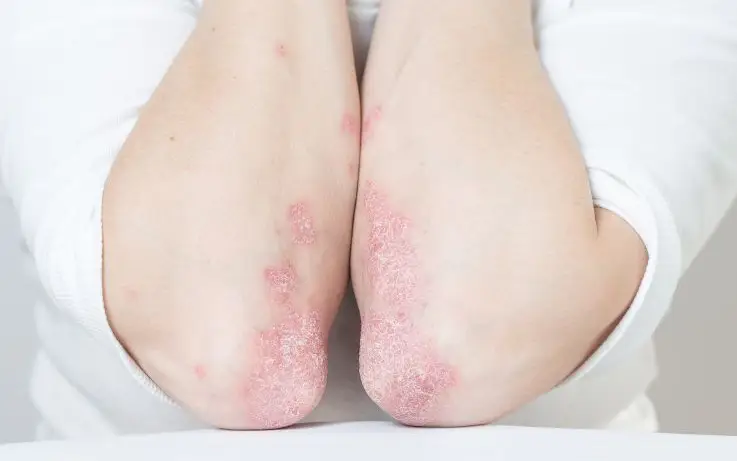
Psoriasis is a long-term autoimmune disease which causes rapid skin cells to develop. This accumulation of cells results in the formation of scales on the skin. Redness and inflammation around the scales have been a common thing. Psoriatic scales are commonly whitish-silver and occur in thick red plaques. But they can also look purplish and dark brown with grey scales on darker skins. Sometimes, these patches will crack and bleed. This article shares details about Psoriasis skin disease from the top Dermatologist in Delhi.
Psoriasis mostly starts from the elbows and knees but may occur anywhere on the body. The most frequently affected areas are the hands, feet, neck, scalp, and face.
Less common areas include:
Several other conditions are also associated with psoriasis. These include:
There are five major types of psoriasis. They all have specific properties and affect skin in their own ways. Understanding these can aid proper diagnosis and treatment.
Psoriasis symptoms will vary from individual to individual. It can occur from small spot-like areas to wide portions of the body.
Common symptoms of plaque psoriasis include:
There are two main tests or examinations used to identify if the person suffers from psoriasis:
Physical Examination: Physical examination is the most common method to diagnose psoriasis. Symptoms are normally easy to differentiate from other diseases. Show the affected areas to the doctor during the exam.
Biopsy: When symptoms are not sure or for confirmation, a doctor may request a biopsy. This includes a skin biopsy for testing.
There is currently no cure for psoriasis but treatments are effective in alleviating the signs and symptoms of this disease. Common treatment options used by Skin specialist in Dwarka are to address inflammation, retard skin cell proliferation, and remove plaques.
Topical agents are creams and ointments that are applied locally to the skin. They help treat mild to moderate psoriasis. Common topical treatments include:
Systemic drugs are utilised in patients with moderate to severe psoriasis or patients who become unresponsive to other therapies. They are taken orally or injected intramuscularly and may cause serious side effects. Common systemic medications for Psoriasis treatment in Delhi include:
Light therapy involves exposing the skin to ultraviolet or natural light. UV light reduces excessive white blood cells that are fighting off healthy skin tissues. UVA and UVB light may also be helpful in treating mild to moderate psoriasis. Light therapy may be taken along with other treatments.
Combination therapy is often used for patients with moderate to severe psoriasis. A combination of more than one treatment type helps alleviate symptoms. This can continue for a long period or the patient can change the treatment if the skin does not react to the same treatment anymore.
Although having psoriasis makes life difficult for the patient, proper control over symptoms lets people lead a relatively healthy lifestyle. You can seek the help of a professional Dermatologist in Delhi to provide the best treatment and advice. It is important to remember that the inflammation is not curable and patients need to follow the treatment plan to control the disease and live normally.
A-4, Sector 19, Dwarka, New Delhi
Contact : +91 7827916023,
011 430 23381
Email: info@skindecor.in