26
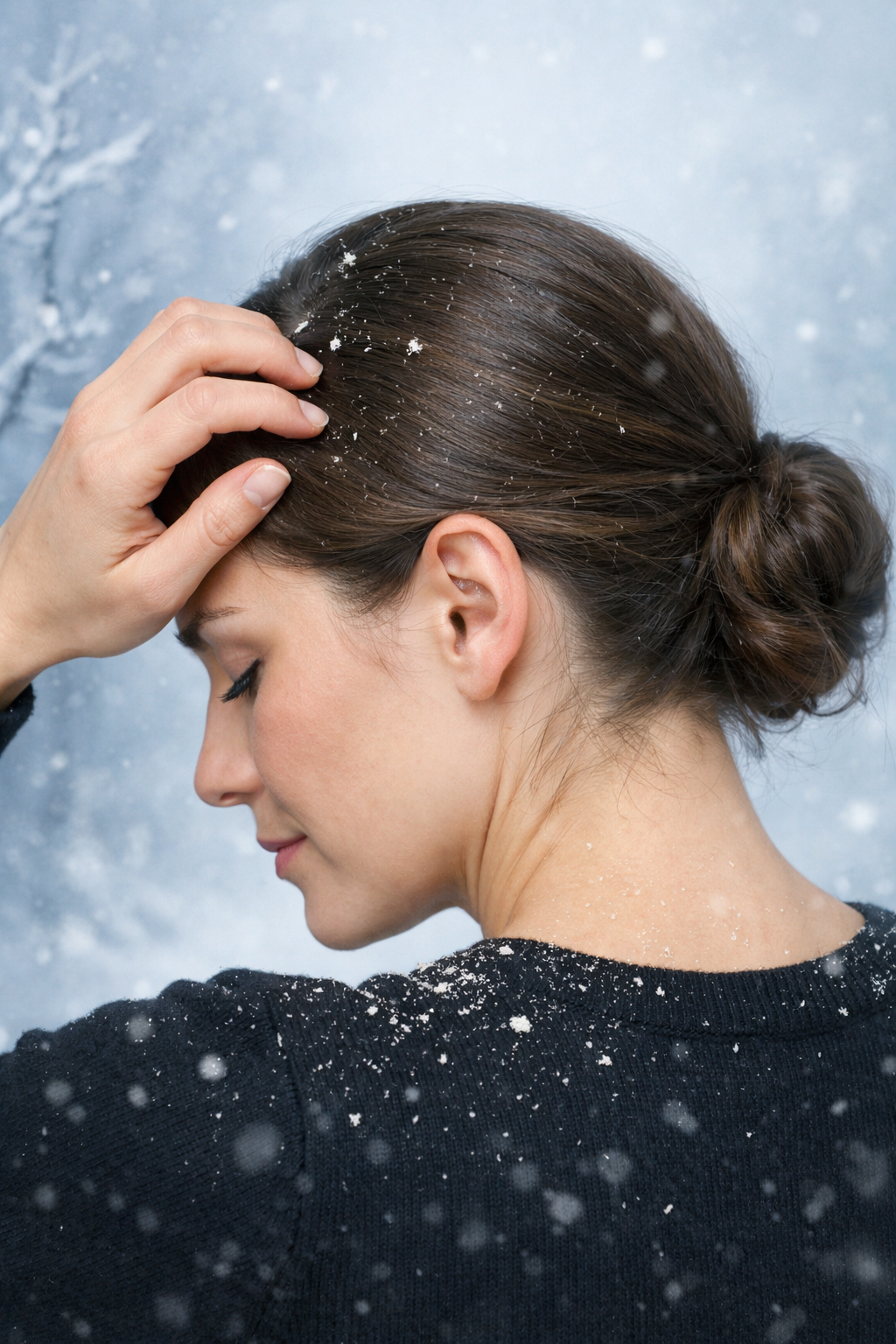
Many people notice that their dandruff worsens during the winter months. White flakes on dark clothes, scalp itching, and dryness become more noticeable as temperatures drop. Winter creates the perfect environment for scalp imbalance, making dandruff a common seasonal concern.
Let’s understand why dandruff increases in winter and what you can do to keep your scalp healthy.
Why Does Dandruff Get Worse in Winter?
1. Cold Weather Dries the Scalp
Cold air outside and dry indoor heating reduce moisture levels in the scalp. When the scalp becomes dry, it starts shedding dead skin cells faster, leading to visible flakes.
2. Hot Showers Remove Natural Oils
While hot showers feel comforting in winter, they strip the scalp of its natural oils. This weakens the scalp barrier, causing dryness, irritation, and increased flaking.
3. Low Humidity Increases Flaking
Winter air has low humidity, which dries out the scalp and worsens dandruff. Reduced moisture disrupts the scalp’s natural balance, making flakes more prominent.
Why Dandruff Is More Common in Winter
The combination of dry air, hot water exposure, and reduced scalp hydration makes dandruff flare up during winter. People with sensitive skin or underlying conditions like seborrheic dermatitis may notice more severe symptoms.
How to Control Dandruff During Winter
✔ Keep Your Scalp Moisturized
Use gentle, dermatologist-recommended shampoos and conditioners that hydrate the scalp.
✔ Avoid Very Hot Water
Wash your hair with lukewarm water to prevent excessive dryness.
✔ Use Anti-Dandruff Shampoo
Products containing ketoconazole, zinc pyrithione, or salicylic acid can help control flaking and itching.
✔ Don’t Overwash
Washing your hair too frequently can strip natural oils. Follow a balanced routine recommended by your dermatologist.
✔ Maintain a Healthy Diet
Omega-3 fatty acids, vitamins, and adequate hydration support scalp health from within.
When Should You See a Dermatologist?
If dandruff is persistent, itchy, spreading to the eyebrows or ears, or not improving with regular care, it may require medical treatment. A dermatologist can diagnose the cause and suggest targeted therapies.
Expert Care You Can Trust
Dr. Monica Chahar
MBBS, MD, FIDP (Germany) – Dermatology
Skin Décor – Skin, Hair & Laser Clinic
+91 7827916023
A-4, Sector 19, Dwarka, New Delhi
Contact : +91 7827916023,
011 430 23381
Email: info@skindecor.in